 sales@sdsd.com
  UK: +44 20 3588 6740 Singapore: +65 3158 7545 Indonesia: +6282145732154
 +6593564863

How to Automate ISM Code Compliance with Software
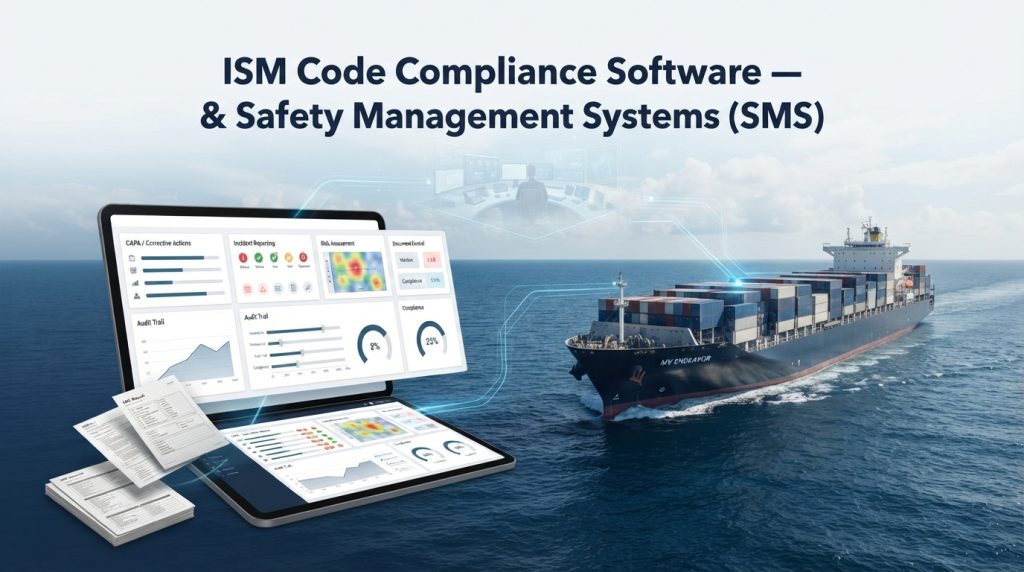
ISM Code compliance software replaces paper-based Safety Management Systems (SMS) with a centralized digital platform. By automating non-conformity tracking through Corrective and Preventive Actions (CAPA), centralizing document control, and generating immutable audit trails, maritime safety software drastically reduces administrative burden, ensures instant audit readiness, and prevents safety-related Port State Control detentions.

How to Automate ISM Code Compliance with Software
Quick View
At A Glance
ISM Code compliance software replaces paper-based Safety Management Systems (SMS) with a centralized digital platform. By automating non-conformity tracking through Corrective and Preventive Actions (CAPA), centralizing document control, and generating immutable audit trails, maritime safety software drastically reduces administrative burden, ensures instant audit readiness, and prevents safety-related Port State Control detentions.
Introduction: The Burden of Paper-Based SMS
Since its implementation, the International Safety Management (ISM) Code has fundamentally improved safety at sea. However, maintaining compliance using traditional paper-based systems or fragmented spreadsheets has created an overwhelming administrative burden for seafarers and the Designated Person Ashore (DPA).
Expert Insight
The sheer volume of paperwork required for manual ISM compliance often distracts the crew from the safe operation of the vessel. Digital SMS platforms shift the focus from paper-pushing back to active safety management – SDSD HSEQ Compliance Team
The Challenges of Manual ISM Code Compliance
Relying on manual processes for safety management introduces critical operational risks. Common challenges include:
- Version Control Nightmares: Vessels often sail with outdated SMS manuals, leading to compliance failures during external audits.
- Delayed Incident Reporting: Paper forms take days to reach the shore office, delaying critical corrective actions and root-cause analysis.
- Lost Audit Trails: Missing signatures on physical checklists result in immediate non-conformities during Flag State Class, Flag State, PSC, or SIRE 2.0 inspections.
- High Administrative Burden: Crews spend hours on repetitive paperwork instead of active safety management.
These inefficiencies directly increase OPEX – through avoidable detentions, slower investigations, duplicated work, and reactive decision‑making.
5 Ways Software Replaces Manual Workflows
Modern maritime safety management systems digitize the entire ISM compliance lifecycle, creating a closed-loop system between ship and shore.
1. Non-Conformity Tracking & Corrective Actions (CAPA)
When an incident, near-miss, or non-conformity occurs, the software provides a structured digital workflow to record the event, trigger immediate alerts to the DPA, and assign corrective and preventive actions (CAPA) with strict deadlines. This ensures nothing falls through the cracks.
2. Automated Audit Trails
Every action within the system, whether a master signing off on a pre-departure checklist or a superintendent updating a risk assessment, is timestamped and tracked. This generates an audit trail that can be instantly produced during Port State Control (PSC), Class, or SIRE 2.0 vetting inspections. Audit preparation shifts from days of scanning binders to one‑click reporting.
3. Digital Document Control
The software acts as a single source of truth for the company’s Safety Management System. When the shore office updates a procedure, the changes are automatically synchronized to all vessels, ensuring the entire fleet operates on the latest approved documentation. Outdated versions are archived automatically, eliminating version control failures.
4. Centralized Risk Assessments
Digital platforms provide centralized libraries for risk assessments and permits to work, allowing crews to access, review, and adapt standard templates rather than starting from scratch, ensuring a consistent safety standard across the fleet.
5. Pre-configured Checklists & Forms
Crew can execute critical operations using mandatory step-by-step digital checklists, ensuring that safety procedures are followed in the exact sequence required by the SMS.
Spreadsheet vs. Automated SMS Platforms: A Comparison
| Feature / Process | Manual / Spreadsheet SMS | Automated ISM Software |
|---|---|---|
| Document Distribution | Emailing PDFs; high risk of outdated manuals onboard | Instant sync; guarantees latest approved versions |
| Incident Reporting | Delayed manual entry; unstructured emails | Real-time structured reporting with automatic DPA alerts |
| CAPA Management | Tracked manually in Excel; prone to missed deadlines | Automated workflows with deadline reminders and escalations |
| Audit Preparation | Days of gathering binders and scanning forms | Instant digital reporting; one-click audit generation |
The OPEX Case for SMS Digitisation
Digitising your SMS reduces operational expenditure in three major ways:
1. Fewer Incidents & Faster Close-Out -Structured reporting and CAPA workflows reduce incident recurrence and shorten investigation cycles.
2. Reduced Administrative Burden – Digital workflows eliminate hours of manual paperwork per vessel per week – freeing crew and shore teams for higher‑value tasks.
3. Better Fleet-Wide Decision-Making – Real‑time dashboards, trend analysis, and cross‑fleet benchmarking enable proactive safety management instead of reactive firefighting.
Conclusion: Streamlining Your Next Audit
Automating ISM Code compliance is no longer optional – it is the most effective way to maintain safe, efficient, and audit‑ready operations. By replacing manual paperwork with an intelligent digital safety management system, shipping companies:
- Protect their crew
- Safeguard their vessels
- Strengthen compliance
- Reduce OPEX
- Improve reporting quality
- Eliminate administrative overload
The gap between manual SMS processes and digital safety management is widening every year. Safety managers who digitise now will be ahead of the curve – not struggling to catch up.
Ready to Automate Your Safety Management?
See how SDSD’s compliance software can digitize your SMS and streamline your next audit.
FREQUENTLY ASKED QUESTIONS
Does ISM software meet the requirements of major Classification Societies?
Yes. Quality maritime safety management software is designed specifically to align with ISM Code requirements. It provides the structured reporting and auditable records that Class surveyors expect to see.
How does the software handle connectivity loss at sea?
A robust system utilizes an offline-first architecture. The crew can continue logging incidents, completing checklists, and viewing SMS documents on the ship’s local network. Data automatically synchronizes with the shore office once satellite connectivity is restored.
Can we integrate our existing SMS manuals into the new software?
Absolutely. The implementation process typically involves digitizing and uploading your existing company-specific SMS manuals, checklists, and forms into the platform’s document control module.